

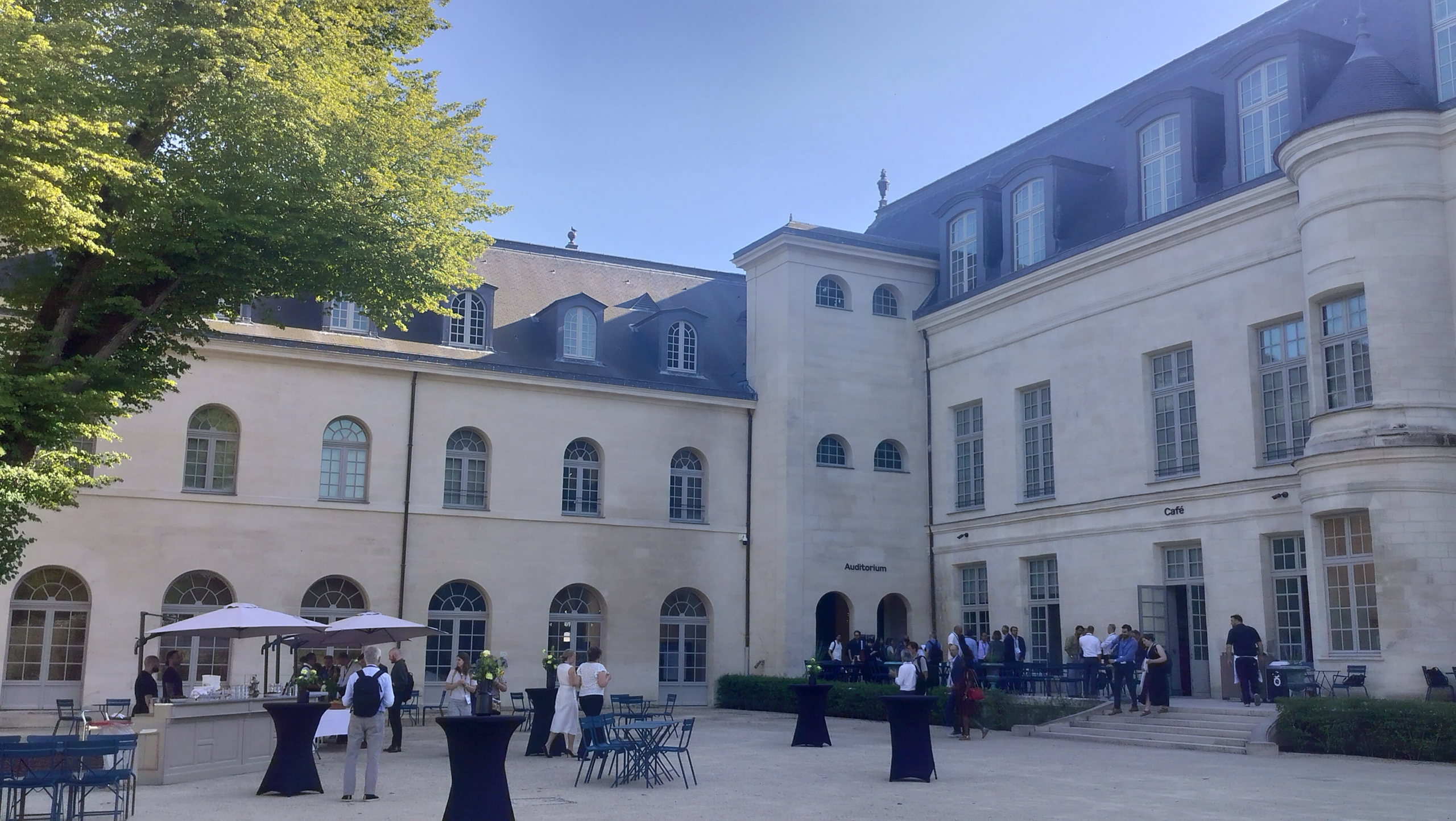
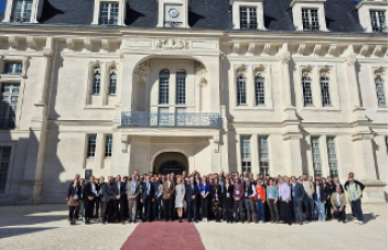
From 15 to 18 June 2026, the historic Château de Villers-Cotterêts hosted ALT-EDIC Week 2026, a milestone gathering of Europe’s language technology ecosystem. Over four days, ALT-EDIC brought together Member State representatives, project partners and other stakeholders to take stock of where Europe’s language technology stands, and where it needs to go next. The discussions focused on the foundations needed to support linguistic diversity in the age of AI: shared infrastructures, high-quality language data, policy coordination, multilingual technologies, and collaboration across sectors and countries.
A Week of Collaboration and Progress
15 June 2026: ALT-EDIC4EU Project Consortium Meeting
The week kicked off with the ALT-EDIC4EU project consortium members sharing their progress. Teams reviewed advancements and challenges within the project, and had insightful discussions to accelerate progress within their work packages.
A key focus of the meeting was the discussion on the transition of the Language Data Space (LDS) data sharing platform to ALT-EDIC. This transition will mark a pivotal moment for the project. The dialogue highlighted both the opportunities and the complexities involved in this shift.
16 June 2026: LLMs4EU Project Consortium Meeting
On the second day, LLMs4EU project partners joined forces to refine their approach and to drive the project forward. The room buzzed with energy as participants shared insights on their use cases and debated ideas.
One of the most engaging parts of the day was seeing representatives across domains pitch and present posters about real-world use cases. The day concluded with a feedback session led by our domain coordinators. By addressing core challenges like data readiness, their concluding assessments provided the strategic steering necessary to guide the project future workflows.
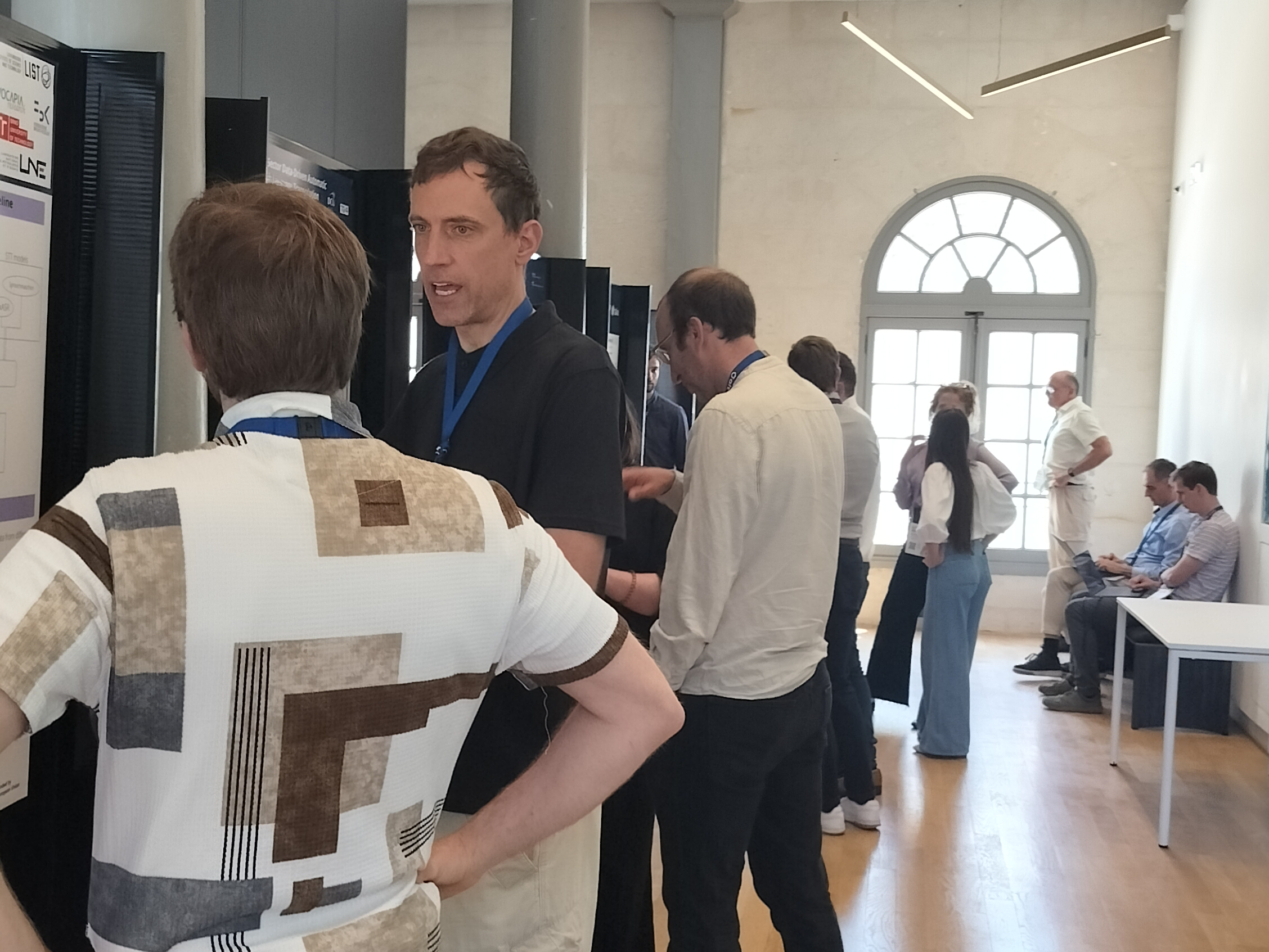
Poster session at the LLMs4EU project meeting on Tuesday, 16 June
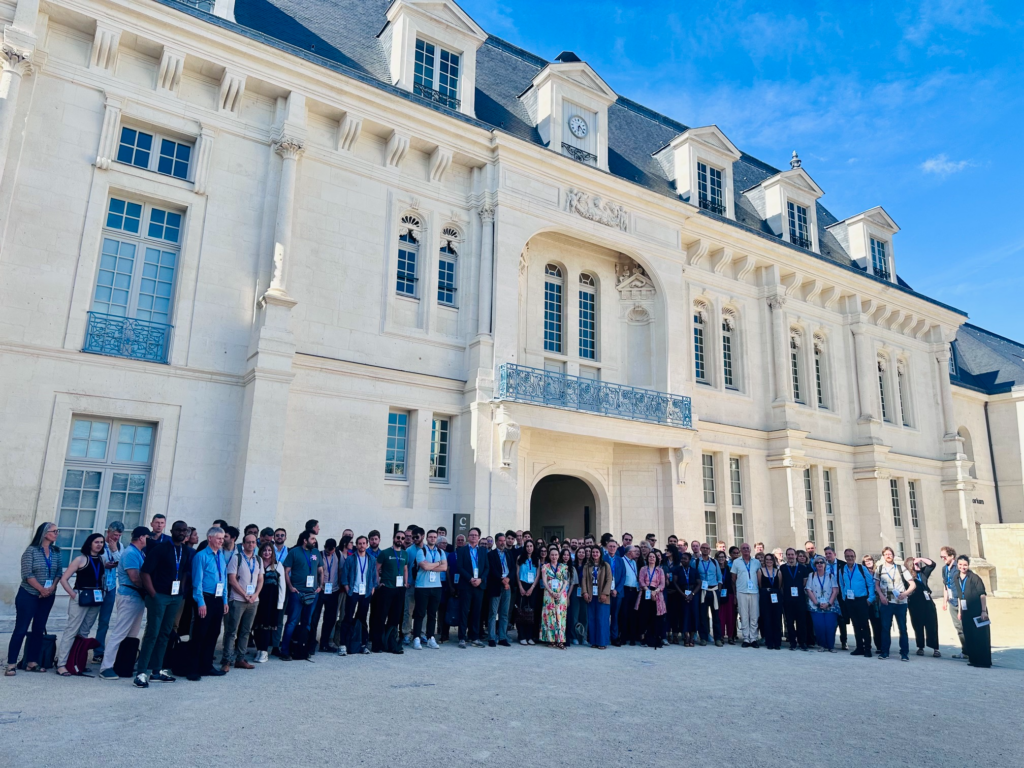
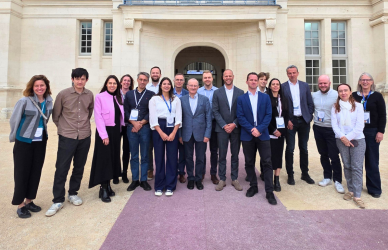
LLMs4EU partners at the Consortium Meeting on Tuesday 16 June
17 June 2026: ALT-EDIC Forum
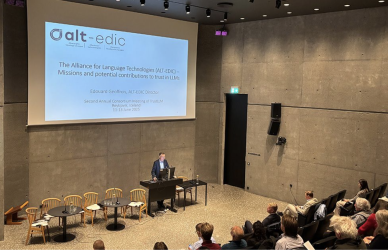
On Wednesday, the ALT-EDIC Forum brought stakeholders together for a dynamic day of discussions on the future of language technologies, AI, and collaboration with the cultural sector. The agenda was packed with presentations of pioneering projects: André Martins presented EuroLLM’s multilingual and multimodal models, Jan Hajič shared updates about the OpenEuroLLM project, and María V. and José Manuel Gómez Pérez discussed fine-tuning LLMs under the LLMs4EU project. Other highlights included a presentation of the LLM-BRIDGE project, which aims to support European GenAI startups and scaleups, GenAI4EU NEXUS’ vision for a European Generative AI Hub, and ELEXAI’s mission of integrating LLMs into ELEXIS, the European Lexicographic Infrastructure. The afternoon sessions dedicated to infrastructure featured CLARIN ERIC, BDVA, IWSLT, and Compar:IA’s transition to a European LLM Arena, while policy experts from the EU, Denmark, Finland, France, Ireland, Iceland, the Netherlands and Poland shared their national AI strategies. The presentations given at the Forum are available here.
The day also included an Industry panel with leaders from Euskorpora, AIC4NL, AppTek.ai, and CrossLang, followed by a thought-provoking Language Technology (LT) & Culture panel with Europeana, TG4, and BNF. The lively exchange of ideas and new connections set the stage for future partnerships.
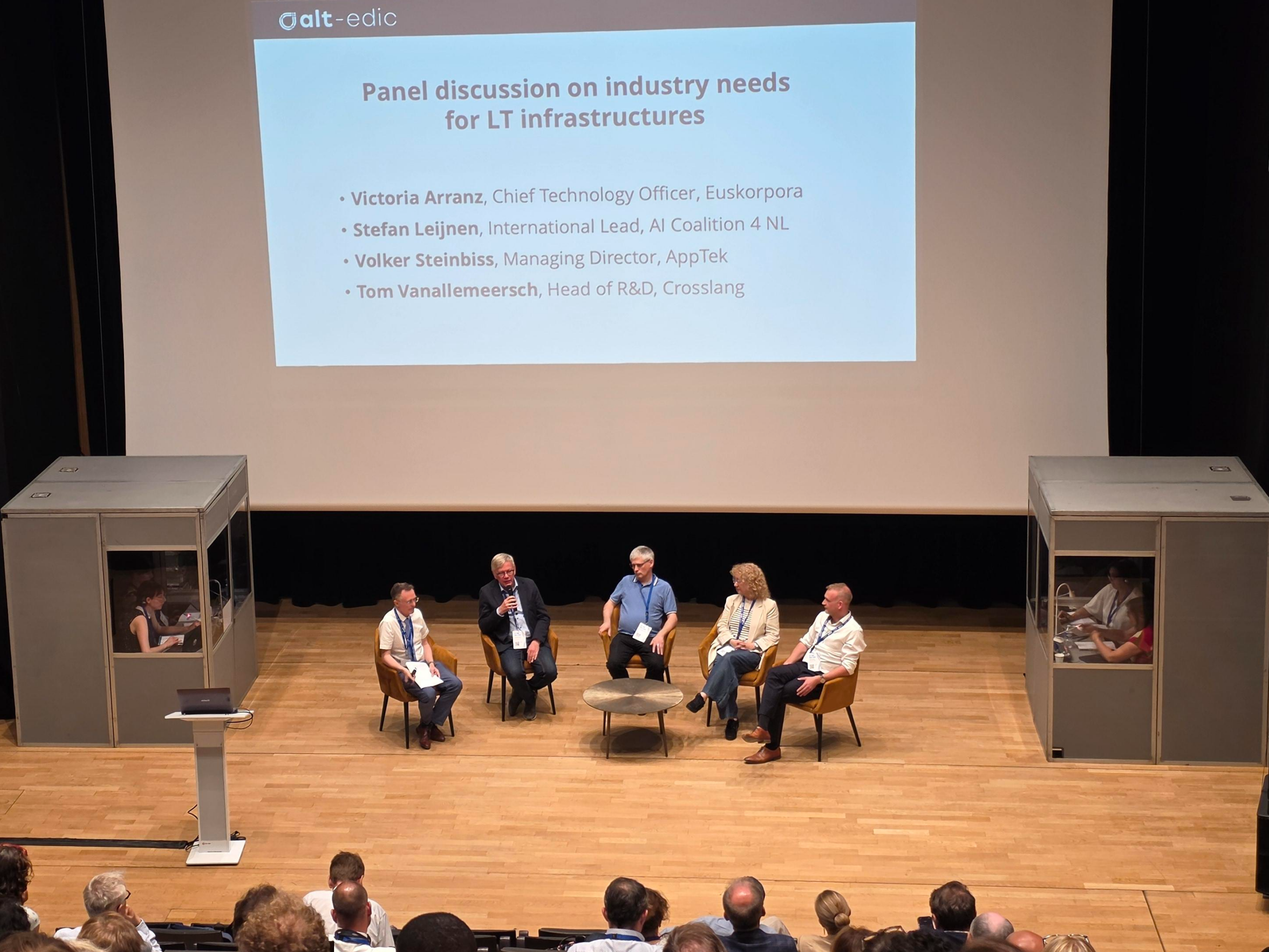
Panel discussion on industry needs for LT infrastructures
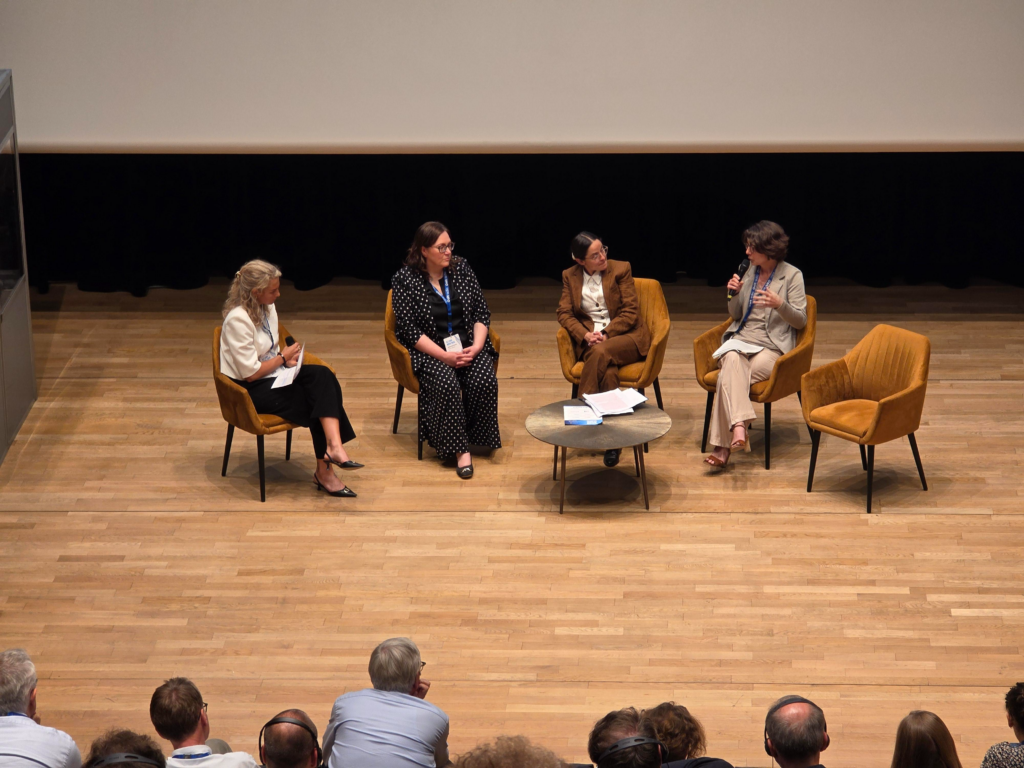
Panel discussion on LT & culture
18 June 2026: Assembly of Members
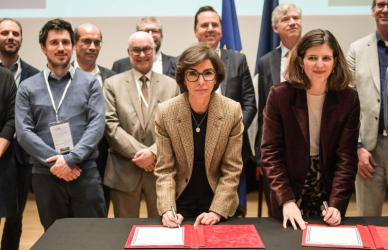
The final day of the ALT-EDIC Week was a pivotal moment for the organisation. During the Assembly of Members, key decisions were made, including the election of the next Chair and Vice-Chair of the AoM to guide the ALT-EDIC’s mission forward.
With Fabio Pianesi and Stefan Leijnen as the new Chair and Vice-Chair respectively, ALT-EDIC is ready to build on the momentum of this week. Their leadership will be instrumental in driving forward our mission of preserving Europe’s linguistic diversity and advancing language technologies.
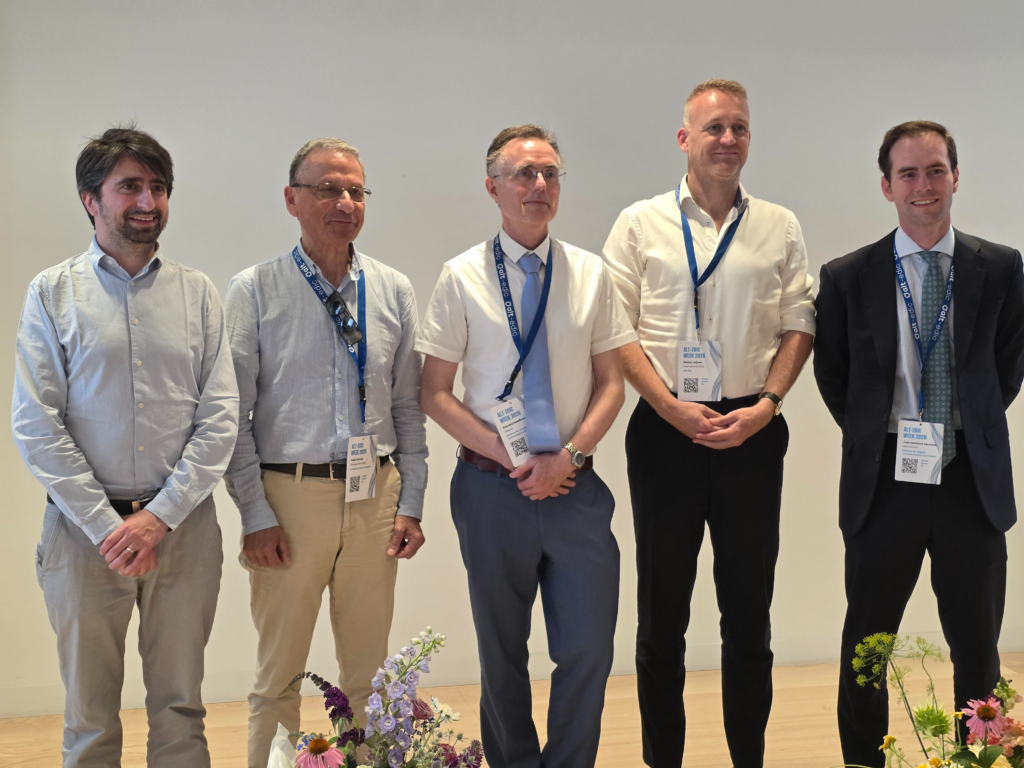
From left to right, Thibault Grouas, former Chair of the ALT-EDIC; Fabio Pianesi, the new Chair of the ALT-EDIC Assembly of Members; Edouard Geoffrois, the ALT-EDIC Director; Stefan Leijnen, the new Vice-chair; and Juan Martínez Samalea, the former ALT-EDIC Vice-Chair
Looking Ahead
ALT-EDIC Week 2026 was key milestone, furthering our mission of promoting excellence in language technologies and contributing to the preservation of Europe’s linguistic diversity and cultural richness. The connections forged, the decisions made, and the innovations shared here will define the next chapter of language technologies in Europe.
This key milestone and many other achievements would not have been possible without the continuous support and leadership of the Délégation générale à la langue française et aux langues de France (DGLFLF, part of the French Ministry of Culture) .
The event was hosted by the Cité Internationale de la Langue Française (part of the Centre des Monuments Nationaux) in the Château de Villers-Cotterêts, which provided a deeply meaningful backdrop. As the birthplace of the 1539 ordinance that established French as France’s official language, the Cité symbolises the enduring power of language and culture to unite us. Today, as the statutory seat of the ALT-EDIC, it reinforces the spirit of European collaboration and innovation that defines our community.


 English